Walkie Talkies

Walkie Talkies at Maplin

What is a Walkie Talkie?

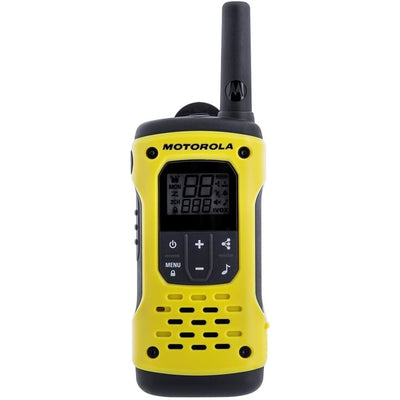
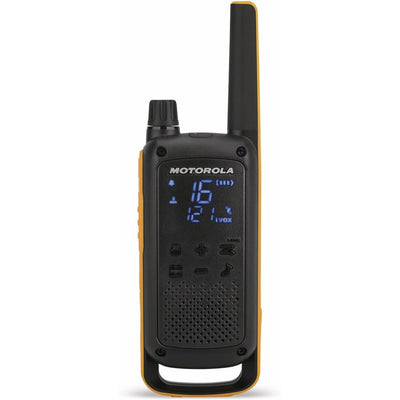
A walkie-talkie is a handheld, two-way radio that lets people communicate wirelessly over short distances. Commonly used for outdoor activities, security, and events, walkie-talkies work by transmitting voice messages over radio frequencies. Each device has a speaker, microphone, and antenna, and users press a button to talk and release it to listen. Unlike phones, they don’t rely on a network service, making them useful in remote areas or during emergencies.

Expanded Image

FAQ

How do walkie-talkies work?

Walkie-talkies are two-way radios that transmit and receive voice signals over radio frequencies. You press a "push-to-talk" (PTT) button to speak, and release it to listen.

Do walkie talkies need a licence in the UK?

Most walkie talkies sold for leisure and general use operate on the PMR446 frequency band, which is completely licence-free in the UK — no registration or fee required. As long as your radio is a certified PMR446 model with a fixed antenna and transmits at no more than 0.5 watts, you can use it straight out of the box. Professional or higher-powered radios outside the PMR446 band may require an Ofcom licence, but these are not typically sold for consumer use.

What is PMR446?

PMR446 (Personal Mobile Radio 446 MHz) is the licence-free radio frequency band designated for short-range two-way communication across the UK and Europe. Walkie talkies that operate on PMR446 are limited to 0.5 watts of power and must have a non-removable antenna — in return, anyone can use them without a licence or any registration. The standard covers 8 analogue channels and, in newer digital models, up to 16 channels. It's the technology behind virtually all consumer walkie talkies sold in the UK today.

Are walkie-talkies secure? Can others listen in?

Basic walkie-talkies are not secure—anyone on the same frequency can hear your conversations. Some models offer privacy codes (CTCSS/DCS), but these don't encrypt the signal; they just reduce interference.

What range can I realistically expect?

Manufacturers often advertise ranges of up to 8–10 km, but these figures are measured in ideal open-air conditions with no obstructions — rarely achievable in real life. In practice, expect 1–3 km in open countryside or on a ski slope, and as little as a few hundred metres in towns, buildings, or dense woodland. Terrain, buildings, and even weather all reduce effective range, so it's always worth choosing a model with a slightly higher quoted range than you think you'll need.

What's the best walkie talkie for kids?

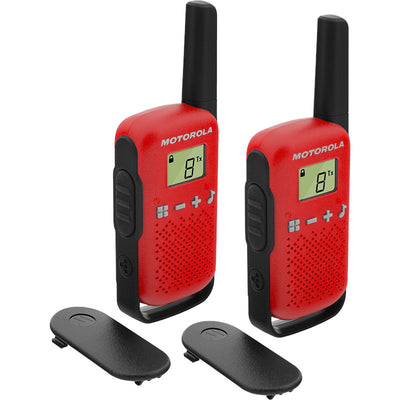
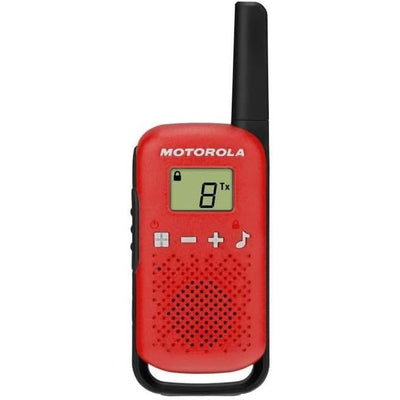
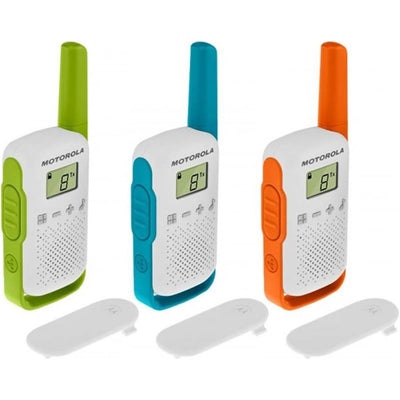
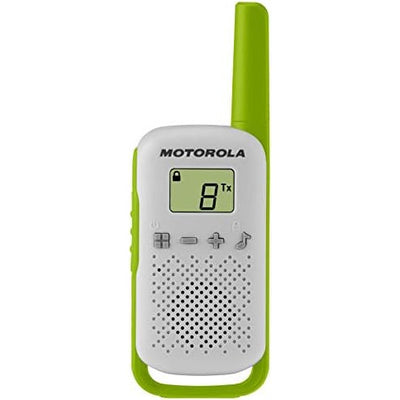
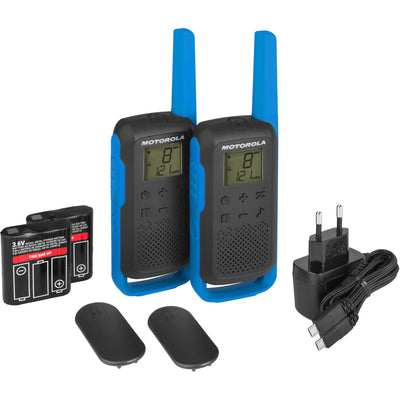
For children, the Motorola T42 is the ideal choice — it's compact, lightweight, available in bright colours, and designed to be as simple as possible, with a large push-to-talk button and easy one-button pairing. At £29.99 for a twin pack, it's affordable enough for family use.

Unlike cheap toy walkie talkies, it operates on the PMR446 frequency band, meaning it delivers real, reliable range (up to 4km) and works anywhere in the UK and Europe without a licence. Suitable for garden play, camping trips, and family days out.